 Apakah Smartwatch dan AI Bisa Mendeteksi Penyakit Sejak Dini? Ini Jawabannya!
  Future Medicines May Be Designed Much Like Software — How Scientists Programmed Human Cells to Compute Like Tiny Processors and Target Cancer Using RNA Trans-Splicing
  TCL RM9L RGB-Mini LED Layak Dapatkan Pujian

### Future Medicines May Be Designed Much Like Software — How Scientists Programmed Human Cells to Compute Like Tiny Processors and Target Cancer Using RNA Trans-Splicing
#### By Efosa Udinmwen | Published 2 days ago
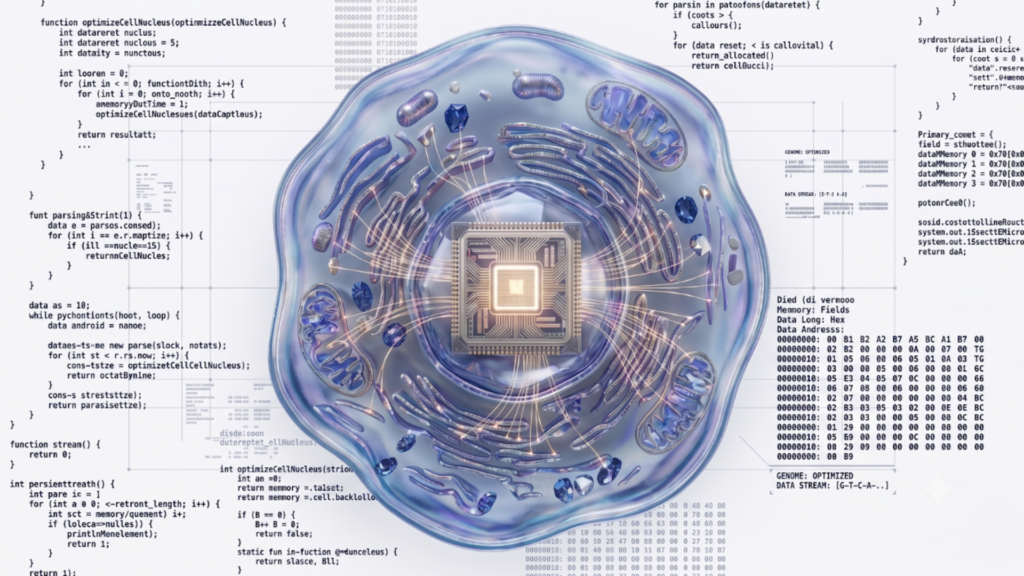
Advancements in medical technology suggest that future therapies may function similarly to software applications. Researchers at Hebrew University have engineered human cells capable of processing multiple biological signals concurrently, akin to small computer chips.
PhD student Keren Roas and Dr. Lior Nissim developed an innovative artificial genetic system that enables cells to execute layered instructions with enhanced reliability. Their findings, published in *Nature Communications*, propose a method that could eventually allow cells to autonomously diagnose and respond to diseases within the body.
### A New Approach to Genetic Computation
Traditional genetic circuits resemble tall buildings, where each additional instruction necessitates another layer of internal processing. As these systems increase in complexity, both their performance and reliability often deteriorate under actual conditions.
To combat this limitation, Roas and Nissim leveraged RNA trans-splicing—a natural process that combines separate genetic messages within living cells. By merging this mechanism with both naturally occurring and artificially engineered regulatory elements, they created molecular tools that function similarly to biological processors.
Dr. Nissim shared that their new method empowers cells to perform complex operations while utilizing significantly fewer calculations and genetic components than previously possible. This optimization makes it feasible to create more sophisticated biological programs without compromising functional accuracy.
“Our approach allows cells to execute complex programs using dramatically fewer calculations and genetic resources,” said Dr. Nissim. “This makes it possible to construct advanced biological applications without losing functionality.”
### Toward Programmable Cell Therapies
The researchers successfully developed a biological “full adder,” a device capable of basic binary computations, and a biological multiplexer, which can select a signal from multiple sources. By using fluorescent proteins that emit different colors, the team was able to visualize the flow of these signals in real time.
The system also features an internal safety mechanism that activates when a cell detects an invalid or overloaded genetic configuration. This results in a distinct warning signal, which may aid in preventing errors during actual medical treatments.
As a proof of concept, the team programmed cells to generate Interleukin-15, an immune protein that enhances the effectiveness of cancer-fighting cells. In theory, similarly engineered cells could track various disease markers simultaneously, releasing treatments only when necessary, thereby allowing for targeted interventions while minimizing harm to surrounding healthy tissues.
By reducing the genetic material and energy needed for cellular decision-making, the researchers have constructed a versatile toolkit for future medical applications. However, the scalability of this approach from laboratory demonstrations to clinical therapies remains an unresolved question. Nonetheless, the underlying concept suggests that medicine may increasingly parallel software design, with biological code directing cellular functions with precision.
About The Author

You may also like
-
Apakah Smartwatch dan AI Bisa Mendeteksi Penyakit Sejak Dini? Ini Jawabannya!
-
Smartwatch dan AI: Awasi Kesehatan Anda Sebelum Terlambat!
-
Wow! 250 Tahun Amerika Rayakan Ulang Tahun dengan Debat Cerdas Berbasis AI!
-
Alibaba Melarang Penggunaan Claude Code setelah Anthropic Terbongkar Melacak Pengguna Tiongkok dengan Kode Tersembunyi
-
Google Kalah Dalam Banding Panjang atas Denda Rekor EU, Harus Bayar $4,7 Miliar
Leave a Reply